
I have an invitation code Click Here.

When readmission rates are lower and case management is streamlined due to excellent discharge planning, overall operational costs diminish, saving money for both the hospital and the patients.
By centralizing case information and communication flows, patients can be discharged the moment they’re truly ready, increasing capacity for patients in need.
Utilizing a care transition platform, like Aidin, allows you to limit time spent on administrative tasks and more time on patient cases, helping optimize productivity and overall quality of care.
According to the Summer Foundation, studies show that discharge planning may lead to increased patient and healthcare professional satisfaction.
Referral and authorization requests enter providers’ electronic health record system – a single, seamless, and centralized digital platform.
Our comprehensive digital platform enables document sharing, timeline creation, prompts, and efficient collaboration via fax, text, and online communication.
Case managers can organize data and patient information, track processes, and pinpoint delays.
Stakeholders (including providers, health plans, and their partners) are held accountable and rewarded when working in a timely manner.
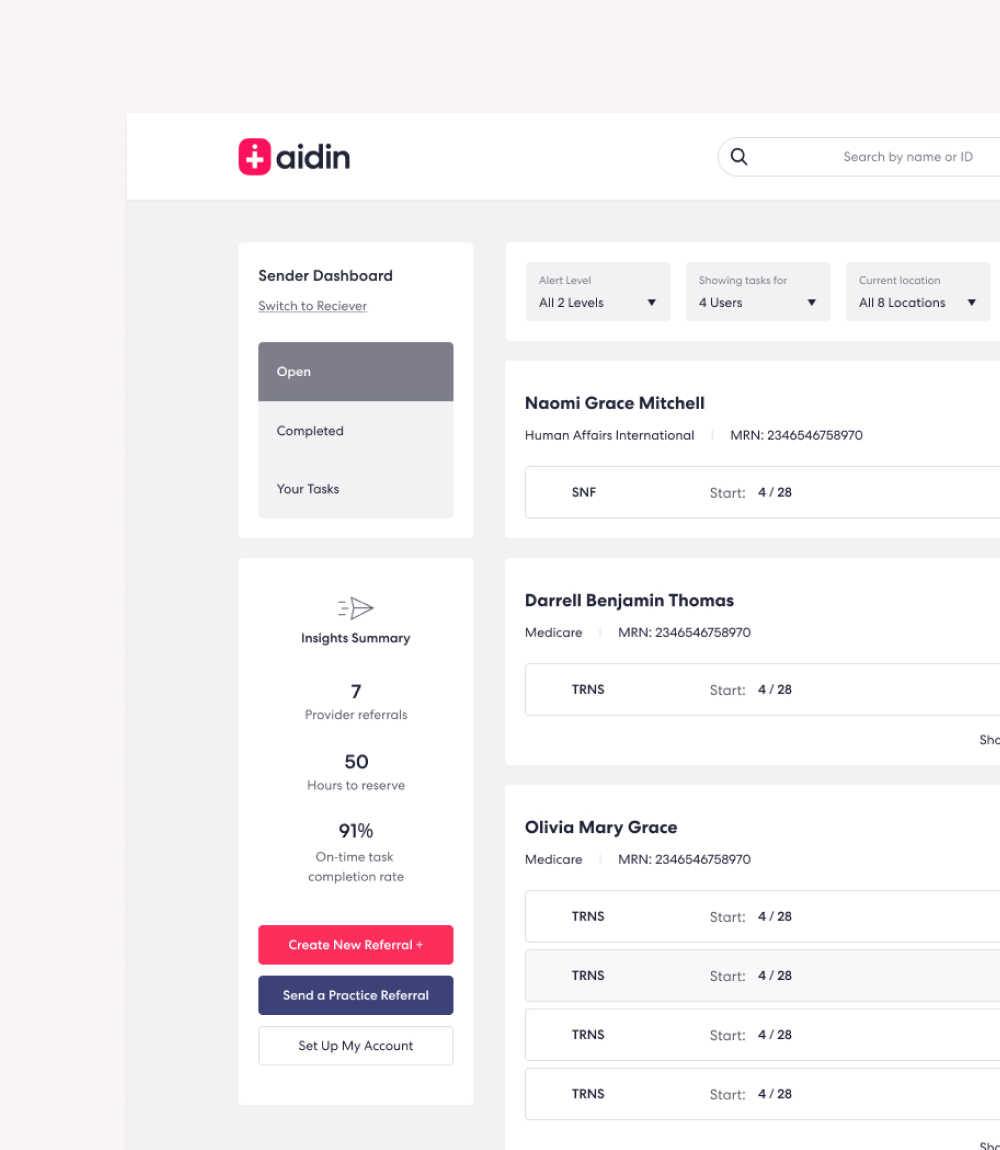
Aidin helps case managers manage care partnerships, referrals, records and authorizations from one single, integrated platform
Stay on top of day-to-day deadlines with visual flags of incomplete tasks, at-risk flows and overdue assignments.
Sort incoming documents from Aidin Printers, faxes, or emails and assign them to patients or requests.
View daily to-do lists per patient and assign tasks to appropriate staff.
Send secure, HIPAA compliant chats and instantly share patient details with anyone in your care community.

Associate Executive Director, Quality & Patient Safety
Your hospital’s discharge plan should include information about where the patient will be discharged to, the types of care they will need, and who will provide that care. Use simple language and include a complete list of the patient’s medications with dosages and usage information, so both healthcare professionals and patients can be on the same page. [2]
In general, discharge planning requires four phases:
High-quality discharge planning leads to a decreased chance of hospital readmissions, increased hospital bed capacity, and reduced overall costs for hospitals.
The difference between average and high-quality discharge planning can mean the difference in:
1. Case manager workload and stress
2. Length of stay and quality of care of patients
3. Operational and readmission costs, and patient capacity of hospitals
A successful discharge planning process includes:
1. Identification
2. Assessment
3. Goal setting
4. Implementation
5. Coordination
6. Evaluation

Discharge Planning
Improve the flow of information and break the cycle of reinjury and readmission.
Learn MorePrior Authorization
Streamline the Authorization Process for Physicians, Staff, and Patients.
Learn MoreHospital Readmissions
Lower readmission rates while prioritizing care and operational performance.
Learn More